
History
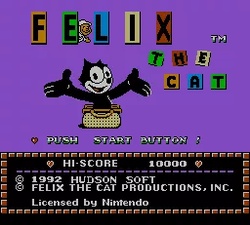
Felix the Cat on NES is that warm‑hearted platformer that landed on our Dendy consoles (those Famicom clones) and instantly moved into memory. Around here it went by every name under the sun: “Felix the Cat,” “Felix the Kitty,” “The Cat Felix,” or just “Felix on the Dendy.” The cartoon look, those big round eyes, and a smile that never left the screen made it feel like a Saturday morning show—you were just the one doing the cloud‑hopping and forest runs. It’s classic 8‑bit through and through: tight controls, clear rules, and a catchy soundtrack you end up humming on the way home. Most importantly, it’s got soul—light, warm, never try‑hard—as if the game gives a wink and nudges you toward one more stage.
The backstory’s lovely too. In 1992, Hudson Soft took the iconic silent‑film and comic‑strip star and carefully translated his universe into a home cartridge. The plot is simple: an evil Professor kidnaps Kitty, and Felix sets off to save her, relying on his magic bag and a wild imagination—think boomerang glove, little car, tank, submarine, airplane, even a hot‑air balloon. Backgrounds and tempo keep shifting—forest, desert, ocean, ice, mountains, space—yet the sense of lift never fades: jumps are crisp, power‑ups generous, bosses fair. No wonder it’s fondly remembered from bootleg packs and multicarts: Felix the Cat goes down easy, yet every run brings back that adventure spark. Curious types—here’s a short making‑of and more on Wikipedia.
Gameplay
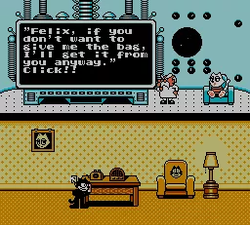
Felix the Cat plays like that rare platformer that makes your thumbs smile. Tap and he obediently rolls forward, pops up with a springy click, and showers sparks from his magic bag—maybe a safe bubble, a boomerang glove, or a full-on fireworks gizmo. The rhythm is brisk and breezy: short straights, nimble steps, foes more about mischief than malice. What keeps you alert is the constant trade-off—push your luck for one more power-up or protect the form you’ve got. One slip and Felix tumbles down the ladder: from a tiny tank to a car, from a plane back to a simple star wand, with that unmistakable old-school “yep, that one’s on me.” Ground, air, water—the game swaps scenes like Saturday-morning cartoon episodes: jungles and circus, ocean depths, then outer space, where Felix no longer runs so much as floats, syncing with the auto-scroller and nailing that perfect jump timing.
Every transformation feels like a mini party. The car gives a cozy purr across platforms, the dolphin slides through underwater stages smooth as a song, and taking the plane is pure freedom—waltzing between projectiles while scooping up heart-lives. Boss fights are lean but memorable: clowns, clockwork fish, the Professor and his tricks—each demands pattern reading and a pinch of patience. It’s a straight-up NES classic without the fuss: readable, rhythmic, and rewarding to the careful. And when Felix fishes a fresh gadget from his bag, you get that childlike certainty again—the world is, kindly, on your side. For more, see our gameplay breakdown—with tempo nuances, safe-line secrets, and how not to lose your best form right before the big finale.