
Felix the Cat Gameplay
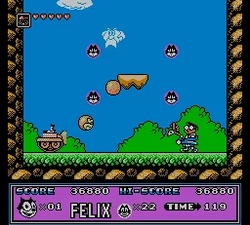
With Felix the Cat on NES—back where some folks even called it just "Felix on the Dendy"—the controls click into your fingers from second one. The jump has spring, shots from the magic bag snap and arc, and each stage sets its own tempo with nothing rushing you along. No timer breathing down your neck. You can ride the melody, sync up with the screen, and nudge your way forward, beat by beat. It’s a platformer you don’t blitz through—you inhabit it: bounce off a crab, tag a bat midair, edge onto a platform, wait for the right heartbeat, and then push on—to the Professor and to Kitty.
Magic bag and transformations
The headline trick in this “Felix the Cat” adventure is the bag itself. Grab hearts and your kit levels up: not just your attack, but your whole movement language. On land, Felix rolls out in a little car, then winds up into a bona fide cartoon tank—you can almost feel each shell thump through your thumbs. In the sky, it’s its own romance: first a breezy balloon drifting between clouds, then a plane with a snappy, chattering gun. On water, you get the dolphin’s gentle glide and, later, a confident, weighty sub. These aren’t just skins. They change your speed, your range, your shot arc—so they shape your tactics. Sometimes the wheels are best for plowing straight through a wave of baddies; sometimes the balloon demands rhythm and a neat little zigzag.
Snagging a heart makes something click inside—one step from the next form. Lose one and the tension floods back: a hit drops your power tier, and you instantly learn to protect your upgrade like that last childhood life. It’s a very honest mechanic. The reward for clean play feels physical—you’re your own difficulty curator. Want steadier firepower? Play tighter, stop wading into the meat grinder. Crave risk? Jump bolder, but be ready to pay with your form.
Stage rhythm
Felix and the bag of tricks spins you through forests, oceans, and clouds, then out to space and the Professor’s lair. Every world has its own groove. The forest teaches timing: spikes, swinging platforms, enemies popping from the brush. Water sections are about patience and flow—read the currents and mind your shot distance. Cloud stages put a light tremor in your fingers as the balloon bobs on updrafts and you sneak between two temperamental platforms. Space clicks with arcade pulse: enemies chain together, and it’s so satisfying to sweep them in bursts—almost a shmup vibe, without the timer panic.
The game smartly alternates brief safe breathers with stretches built on one or two sharp jumps. Catching the pattern is half the job. At first, the enemy flow looks random; a minute later you know where the bird spawns, where a barrel rolls in, and where to tap the brakes. Checkpoints are tidy: they don’t punt you way back, but they won’t let you bulldoze either. The whole run smooths into a long, even cruise—that “just one more level” itch straight off a childhood NES cart.
Boss duels
World finales are little reflex duels. The Professor hides in another silly contraption every time, and every time he makes you relearn. One fight he fans shots, another he bounds around the arena, another he streaks in on a diagonal—and you hunt for the window between attacks. No cheap nonsense: patterns telegraph, rhythms lock in, and the prize is better than points—fresh stages ahead and a chance to power the bag to your favorite form. The sweetest feeling is entering a boss already leveled up: swoop in by plane, hold your spacing, and the fight becomes a careful dance between two or three safe spots. But blink once and you’re back to the peashooter, on thin ice, squeezing everything out of your jump and timing.
Micro-choices and little joys
Even the small stuff feels good. Bullets aren’t instant—their speed seems to sync with your stride, building a step-shot-step rhythm. The jump is short, no frills—and all the better for it, giving you a clean vertical game: hop up, clip an enemy off a ledge, and ease into a soft, inertial landing. Hearts popping from crates and foes ring like tiny parties. Sometimes there’s a bonus room—a few seconds to scoop rewards, a quick breather between sprints. Sometimes you surface at the exact second you needed—and it’s a pure hit of joy when music, backdrop, and your move line up into one perfect frame.
Felix the Cat’s difficulty is steady—friendly but stubborn. It’s a platformer raised on arcade logic: no need to cram a hundred tricks, just hear the screen’s rhythm. Shots, jumps, little pokes at enemies, careful edge-stops—it’s all about holding tempo. No nasty gotchas that wreck a run—just good tone and fair rules. You come back not because you got stuck, but because it’s a treat to feel the car purr along the ground, the balloon’s soft bounce, and the sub’s quiet thud-thud punching through the water.
And one more detail—the kind that warmed then and warms now: the game quietly lets you choose—charge ahead or make it look clean. Grab an extra heart, wait half a second, let foes drift into the right pattern, then erase them with one rhythmic volley. It’s not about leaderboard times or speedruns; it’s about that “play it right” feeling. Maybe that’s why Felix the Cat pops up so easily in retro talk: not just “how to beat it,” but “how great it felt to go,” when everything—from a cloud to a shot—falls in step with your inner metronome.